Cricket, Crypto, and the Cash Con—Inside India’s Betting Underground of 2026
 Amritpal Singh Sanhotra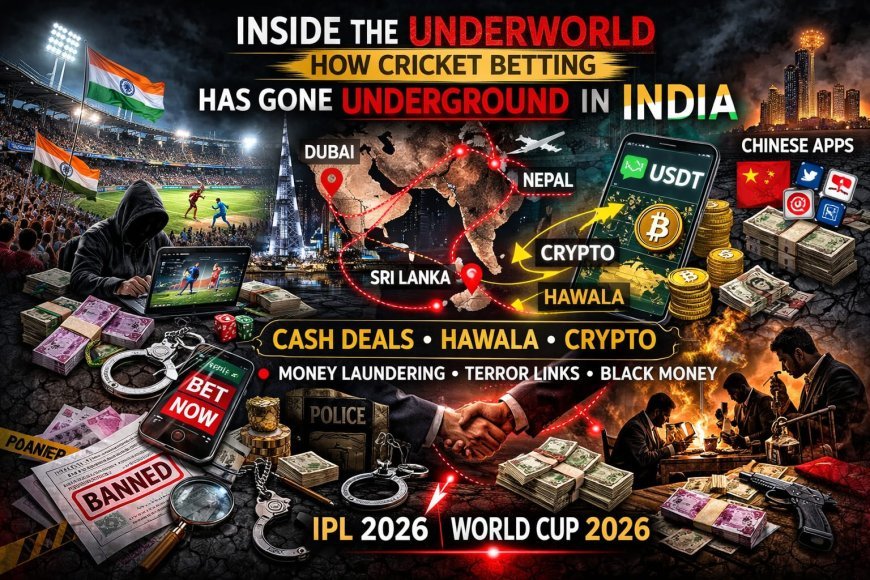
As Cricket fever sweeps India ahead of the 2026 ICC World Cup and the Indian Premier League, a shadow economy tied to the sport is booming — one that government bans and enforcement drives haven’t been able to stop.
Despite clear laws outlawing online gambling, India has witnessed a surge in illegal betting platforms that lure fans with promises of quick wins and big payouts. According to government data, the Centre has blocked hundreds of unlicensed betting and gambling apps — including major offshore platforms such as Parimatch, Fairplay, 1XBET, Lotus365, Dafabet and others — under the IT Act as part of efforts to choke off illegal operations.
But banning apps hasn’t shut down the business. On the contrary, experts say syndicates have evolved in sophistication, blending technology with traditional financial networks. A report by the Directorate of Enforcement uncovered how illegal platforms use mule accounts and shell entities to collect betting money and then launder proceeds through under-the-radar routes such as hawala and cryptocurrency wallets — tactics that make tracing and prosecution extraordinarily difficult.
In Mumbai and other cities, Enforcement Directorate raids have recently unearthed hawala-backed betting networks where operators used white-label apps like VMoney and 11Starss to mask their ownership and operations, moving cash, luxury assets and foreign currency as proceeds of crime.
A Network That Never Sleeps
In one dramatic case in Uttar Pradesh, police uncovered an illegal betting ring operating out of a house in Bisrakh. Investigators found nearly 30 people running an online platform under the guise of tech support, using VPNs, fake emails, and crypto payments while posing as legitimate staff — tactics designed to hide users’ and operators’ true locations.
Other police operations have tied international bookies and Indian intermediaries together in complex betting networks. In Gujarat, investigators uncovered a mafia-linked syndicate involving around 20 people with connections to networks spanning India and the Gulf, collecting crores worth of transactions through offshore betting sites and shuttered accounts.
A Multi-Billion Dollar Underground
Independent analyses suggest that India’s illegal betting and gambling market is not a fringe activity but a vast, growing industry. One think tank reported that over a 12-month period, India’s most popular illicit platforms saw more than 5.4 billion logins, with total deposits potentially reaching into the tens of billions of dollars.
Critics warn that this isn’t just a matter of financial loss for fans — it’s a structural risk for the economy, national security, and the integrity of the sport itself. Analysts have repeatedly raised concerns that foreign-controlled and offshore platforms, particularly those with links to Chinese operators, raise data security and fraud risks, as well as creating channels for unregulated capital flows.
Government vs Syndicates: A Cat-and-Mouse Game
The Indian government’s response has been aggressive: thousands of illegal links have been blocked, millions have been seized from frozen bank accounts linked to betting rings, and dozens of FIRs and enforcement actions have been launched. During the IPL 2025 season alone, authorities seized crores of rupees from illegal accounts and froze over 2,400 bank accounts tied to betting networks.
Yet as regulators plug one hole, operators find another. When apps are blocked or accounts frozen, many syndicates convert blocked balances into cryptocurrency tokens like USDT and route value back into India through hawala or cash dealings — moves that dramatically reduce digital footprints and make law enforcement’s job harder.
As one law enforcement officer candidly put it last year, “Even when you shut off a server or freeze a bank account, the money doesn’t disappear — it just moves somewhere you can’t see.”
Beyond the Bet: Social and Security Consequences
What started for many fans as casual betting has morphed into something far more intricate — intertwining organized crime, offshore finance, and digital subterfuge. Social critics also warn of addiction issues, fraud losses, and the ease with which vulnerable populations can be lured into betting traps that offer small early wins, but large eventual losses.
With cricket at the center of India’s sporting identity, the story of illegal betting is no longer just tangential — it’s part of the ongoing battle to protect fans, finances, and the spirit of the game itself.

Timeline of Betting & Gaming Crackdown in India
2023 – Early Government Actions
Nov 2023 – The Centre issues blocking orders against 22 illegal betting apps and websites, including platforms like Mahadev Book Online, following Enforcement Directorate (ED) investigations into money-laundering and unauthorized gaming networks.
Dec 2023 – The Ministry of Electronics and IT (MeitY) reported that 174 betting and gambling apps had been blocked among hundreds of online platforms targeted so far, after enforcement actions uncovered links to digital money flows and hawala networks.
2024 – Building Enforcement Foundations
Multiple raids & seizures – Enforcement agencies like ED and state cyber cells carried out raids in several states (e.g., Madhya Pradesh, Karnataka, Maharashtra) targeting illegal betting operations and associated “satta matka” apps, seizing unaccounted cash and digital evidence.
Supreme Court scrutiny – Public interest petitions were filed urging bans on both online and offline betting apps and celebrity endorsements, prompting notices to the government and highlighting the social harms linked to betting addiction.
2025 – Major Legal & Enforcement Changes
Aug 20–22, 2025 – Parliament passes the Promotion and Regulation of Online Gaming Act, 2025, a landmark law aimed at regulating online gaming, protecting users, and banning real-money betting and gambling platforms nationwide.
Aug 2025 – Global operator Flutter shuts down its real-money gaming operations, including its Junglee platform in India, citing the new law which bans such games — a sign that corporate platforms were reassessing their India exposure.
Sep 2025 – Telangana CID raided illegal betting apps across Rajasthan, Gujarat and Punjab, arresting eight individuals linked to multiple apps and collecting key data for further investigation.
Edgier developments – India’s Enforcement Directorate summoned executives from major tech companies over alleged money-laundering links and ad-related promotions for betting platforms, highlighting the reach and promotional vectors of illegal online betting.
Celebrity angle – ED expanded its probe into illegal apps, questioning celebrities and sports personalities over their involvement in promoting banned platforms — a reflection of how widespread these networks had become.
2026 – Crackdown Intensifies
Jan 2026 – The government blocks 242 illegal betting and gambling websites, taking the total number of platforms shut down to over 7,800 since the new online gaming law came into effect. Officials said this reflects renewed enforcement intensity focused on financial and social harms.
Ongoing Operations – As the 2026 Cricket World Cup unfolds, local police have apprehended individuals betting inside stadiums and busted spot betting rings in towns like Saoner, indicating that illegal bets are still being placed offline even as digital platforms are targeted.
Reported scams – Cases continue to emerge where victims have lost tens of lakhs to mirror betting websites that exploit vulnerabilities in blocked apps and promises of recovery, prompting new FIRs and investigative efforts.
Key Takeaways — What This Timeline Shows
Enforcement has escalated year by year, from blocking illegal apps to enacting new federal law.
Judicial oversight and public interest litigation put political and legal pressure on the government to act.
International business and tech platforms have been directly drawn into investigations due to advertising or monetization links.
Even after bans and raids, illegal betting persists through mirror sites, cash circuits, alternative financial channels and localized spot betting.